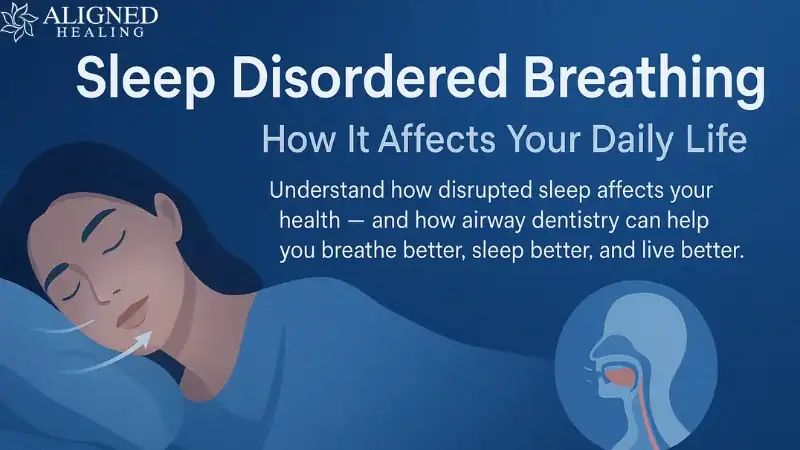
Quality sleep is one of the cornerstones of good health. For many people, however, breathing problems during sleep quietly disrupt this vital process. Sleep disordered breathing (SDB) refers to a range of conditions that affect normal breathing during sleep, from mild snoring to more serious conditions like obstructive sleep apnea. While these issues often go unnoticed, their impact on daily life and long-term health can be serious. The good news is that airway dentistry offers effective, non-invasive solutions that address the root cause rather than just the symptoms.
Understanding Sleep Disordered Breathing
Sleep disordered breathing occurs when the airway becomes partially or completely blocked during sleep, interrupting normal breathing patterns. These pauses in breathing, which sometimes last several seconds, can happen dozens or even hundreds of times throughout the night.
Common forms of sleep disordered breathing include:
- Snoring: The sound of air vibrating against relaxed tissues in the throat. Often a sign of a narrowed airway.
- Upper Airway Resistance Syndrome (UARS): A condition in which breathing becomes labored due to resistance in the airway. This leads to frequent sleep disruptions even without complete pauses in breathing.
- Obstructive Sleep Apnea (OSA): The most severe form, where the airway closes or collapses entirely during sleep, causing repeated interruptions in breathing and oxygen flow.
Even if you don’t fully wake up during these episodes, your brain and body are repeatedly jolted out of deep, restorative sleep, and that takes a toll.
How Sleep Disordered Breathing Affects Daily Life
1. Daytime Fatigue and Poor Concentration
One of the first signs of sleep disordered breathing is excessive daytime sleepiness. Because your body never reaches the deeper stages of sleep it needs for recovery, you may wake up feeling tired even after a full night in bed. Many people describe feeling foggy, irritable, or unable to focus. This “brain fog” can affect your work performance, relationships, and even your safety, especially when driving or operating machinery.
2. Mood and Mental Health
Interrupted sleep affects your brain’s ability to regulate emotions. People with untreated sleep disordered breathing are more likely to experience mood swings, anxiety, and depression. Over time, chronic fatigue can make it harder to cope with stress, leading to a vicious cycle of emotional strain and poor sleep.
3. Cardiovascular Strain
Every time breathing stops during sleep, oxygen levels in the blood drop. Your heart must work harder to compensate, increasing blood pressure and putting stress on the cardiovascular system. Untreated sleep apnea has been linked to serious health conditions, including hypertension, heart disease, stroke, and arrhythmias.
4. Metabolic and Hormonal Effects
Sleep disordered breathing also disrupts the body’s hormonal balance. Poor sleep affects insulin sensitivity, which can contribute to weight gain and increase the risk of developing type 2 diabetes. Hormones that regulate appetite, such as ghrelin and leptin, also become imbalanced. This imbalance can make you feel hungrier and more prone to overeating.
5. Reduced Immune Function
During deep sleep, your body produces cytokines. These are proteins that help fight infection and inflammation. When sleep is repeatedly interrupted, your immune system becomes less effective, leaving you more susceptible to illness and slower to recover from stress or injury.
6. Oral and Dental Health
From a dental perspective, sleep disordered breathing can lead to a host of oral health issues. Mouth breathing, which often accompanies airway obstruction, can cause dry mouth, gum inflammation, bad breath, and an increased risk of cavities. Grinding or clenching the teeth (bruxism) is also common in people with airway restriction, potentially leading to tooth wear, jaw pain, and temporomandibular joint (TMJ) problems.
How Airway Dentistry Can Help
Traditional approaches to sleep disordered breathing often focus on managing symptoms—using devices like CPAP machines to maintain airflow during sleep. While effective for many, these solutions don’t always address the underlying anatomical causes of airway obstruction.
Airway dentistry takes a different approach by identifying and treating the structural issues within the mouth and jaw that contribute to restricted airflow. Through careful evaluation and advanced diagnostic tools, airway-focused dentists like Dr. Safavi can help patients both breathe and sleep better.
Here are some of the ways airway dentistry can make a difference:
1. Comprehensive Airway Assessment
Dr. Safavi will evaluate how your tongue, jaw, and soft tissues interact during sleep. Our team may use imaging technology, sleep studies, and a physical exam to assess the size and shape of your airway. This helps determine whether anatomical factors, such as a narrow palate, tongue posture, or jaw alignment, are contributing to your breathing difficulties.
2. Oral Appliance Therapy
For many patients, a custom oral appliance can provide a simple and comfortable solution. These small, mouthguard-like devices reposition the lower jaw and tongue slightly forward to keep the airway open during sleep. They are quiet, portable, and often more comfortable than a CPAP machine, making them an excellent option for mild to moderate cases of sleep disordered breathing.
3. Myofunctional and Orthopedic Approaches
Airway dentistry may also incorporate myofunctional therapy to improve breathing patterns. Myofunctional therapy includes exercises that strengthen the muscles of the tongue, lips, and throat. In some cases, orthodontic or orthopedic treatments can help widen the dental arches and create more space for the tongue, reducing airway restriction.
4. Long-Term Health Focus
Because airway dentistry addresses the root cause of breathing issues, patients often experience improvements that extend beyond better sleep. Many notice increased energy, sharper focus, reduced snoring, improved mood, and even relief from jaw tension and headaches.
Restoring Health Through Better Breathing
If you find yourself waking up tired, snoring loudly, or struggling with unexplained fatigue, sleep disordered breathing may be the culprit. Left untreated, these issues can quietly undermine your health and quality of life—but they don’t have to.
Airway dentistry offers a holistic, patient-centered way to restore healthy breathing and restful sleep. By addressing the root causes of airway restriction, your dentist can help you reclaim your energy, focus, and overall well-being. To learn more, we welcome you to contact us today at Aligned Healing.